Startup World Cup 2026 Awards $1 Million Grand Prize to ZymoChem
A tiny chemicals startup just beat 200 countries' best founders to win a million dollars. Here's how it did it, and what you can learn from it.
A tiny chemicals startup just beat 200 countries' best founders to win a million dollars. Here's how it did it, and what you can learn from it.
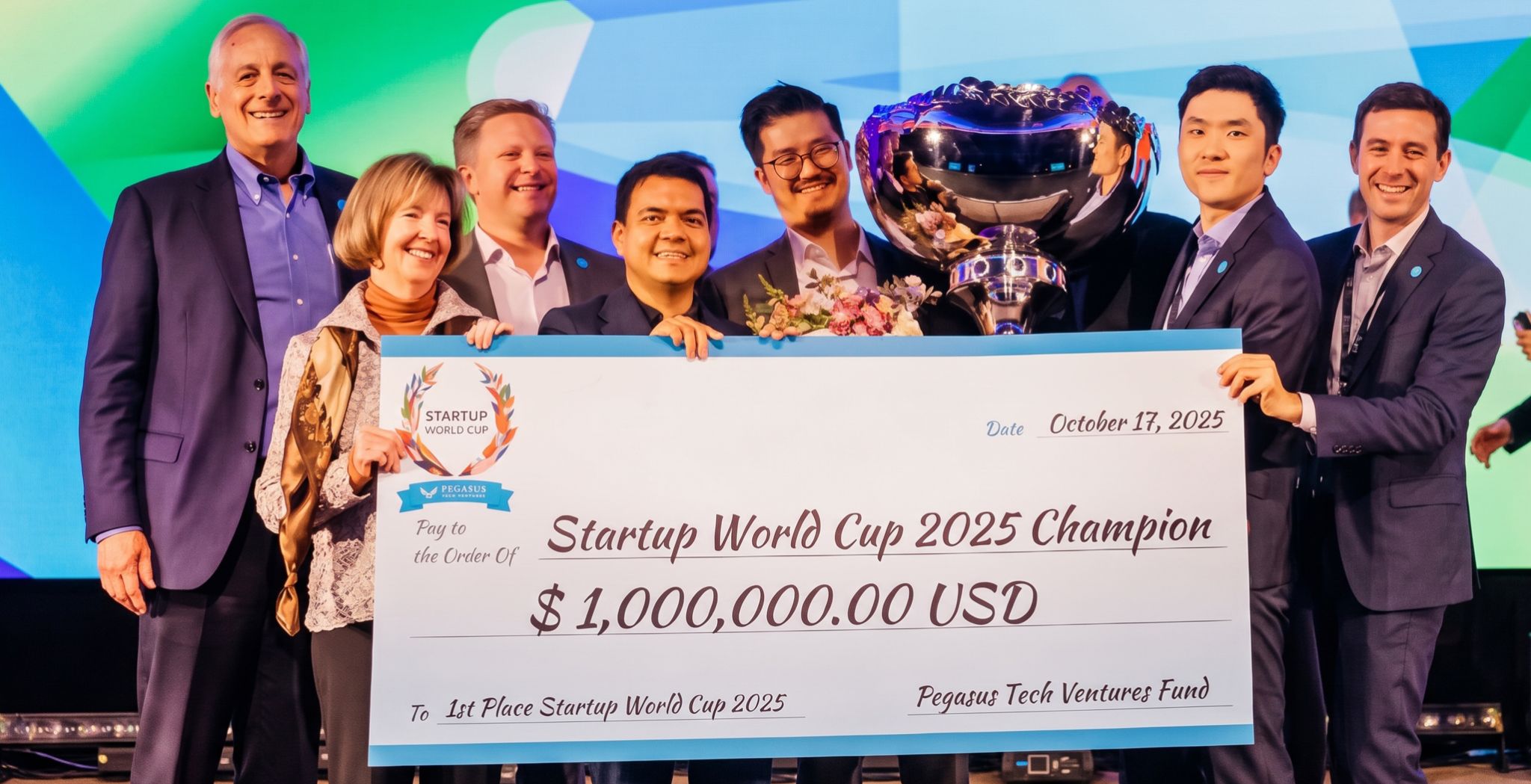
On November 6, 2026, a small company from the East Bay called ZymoChem won the $1 million grand prize at the Startup World Cup, the world's largest startup pitch competition. It beat out more than 200 regional champions from over 60 countries to take the top spot in San Francisco.
What makes the win interesting is not just the money. ZymoChem does something that sounds almost strange. It uses tiny living microbes to make everyday chemicals, replacing the oil-based process that has run the industry for a century. In a field full of apps and AI tools, a company growing chemicals in a tank took home the biggest prize.
Here is the full story behind the win, told in plain terms, plus what founders can take away from it.
What ZymoChem Actually Makes
Most of the chemicals in everyday products, from plastics to fabrics to the gel inside a baby's diaper, are made from oil. ZymoChem makes those same chemicals in a different way. It feeds plant-based, renewable material to specially designed microbes, which ferment it into the chemical the company wants, much like yeast turns sugar into alcohol. The company calls its microbes "carbon conserving" because they waste very little of the raw material as they work.
The result is a chemical that performs like the oil-based version but comes from renewable sources and breaks down naturally. ZymoChem's headline product is BAYSE, which it describes as the first of its kind that can be made at large scale. It is the super-absorbent material that soaks up liquid inside diapers, usually made from oil and a source of plastic waste. In its own home testing with real parents in 2026, ZymoChem says its bio-based version matched or beat regular diapers on the things parents actually notice.
That matters because the hygiene industry it is chasing is worth around $145 billion. ZymoChem is also working on bio-based nylon, the fabric in a huge share of clothing, which is why the activewear brand lululemon signed a multi-year deal to work with it. The pitch to big companies is simple. Get sustainability without paying a "green premium," because ZymoChem says its process can match the price of the oil-based option.
A Ten-Year Journey, Not An Overnight Win
The prize looks like a sudden breakthrough. It was not. ZymoChem started as an idea on paper in 2013, when two scientists, Harshal Chokhawala and Jon Kuchenreuther, finished their research together at UC Berkeley. Chokhawala is now the CEO and Kuchenreuther the chief science officer.
The early years were slow and unglamorous. They chased small research grants to fund the science, joined a startup program called IndieBio in 2015, and spent years refining the microbes that became their core technology. A personal detail shaped the whole direction of the company. Both founders became fathers, and that experience pushed them to aim their first product at diapers, one of the most wasteful everyday items on the planet.
The milestones added up slowly. Over the next ten years, the founders secured patents for their process, which are legal rights that stop other companies from copying an invention. They set up a headquarters in San Leandro and signed a development deal with a Fortune 500 chemical company. In 2024, they raised $21 million. Their first product, BAYSE, launched that same year, about a decade after the first sketch. The Startup World Cup win sits on top of all that quiet, slow work. That is the part most headlines miss.
What The Startup World Cup Actually Is
If you have not heard of it, the Startup World Cup is a global pitch competition. It is run by Pegasus Tech Ventures, a Silicon Valley investment firm that manages around $2 billion, and was created in 2016 by its founder, Anis Uzzaman.
The format is simple. Throughout the year, the competition holds more than 200 regional events across dozens of countries, from Melbourne to Bangalore to the East Bay. Each regional winner earns a seat at the Grand Finale in San Francisco, where they pitch for a single $1 million prize. Entering is free, which is part of why it draws so many founders.
Past champions give a sense of the range. Recent winners include Coreshell in 2025 and EarthGrid in 2024, covering everything from batteries to underground infrastructure. The event has also drawn big names from tech to its stage over the years, and this year's speakers included a co-founder of Tesla and Microsoft's chief sustainability officer. In short, winning it is a real signal, not just a cash prize.
How The Final Played Out
The 2026 Grand Finale ran over three days, from November 4 to 6, at the Hilton San Francisco Union Square, drawing a crowd of several thousand founders, investors and corporate leaders. The regional champions had already won their local heats across more than 60 countries, so every founder on stage was a winner before the final even began.
On the last day, the field narrowed to a handful of finalists who pitched in front of a panel of venture capital judges. ZymoChem came out on top. Spain's LainTech finished as a runner-up, alongside Kauche, a company from Tokyo, which shows how wide the net was.
It is worth being clear about the prize itself. The $1 million is an investment from Pegasus Tech Ventures' fund, not a no-strings cash gift. In practice that means the firm is backing ZymoChem as it would any company it invests in, which is a vote of confidence as much as a check.
The Hard Part Is Still Ahead
Winning a million dollars is a great headline, but the real test for ZymoChem starts now. The oil-based chemical industry has had a hundred-year head start. Its factories are built, its costs are low, and its supply chains are everywhere. A newcomer has to match that on price while building its own production from a much smaller base.
This is the catch with most bio-based products. They are often cleaner but more expensive, and buyers rarely pay extra for green alone. ZymoChem's whole argument is that it can avoid that trap and hit the same price, but doing it at the scale of a global chemical giant is unproven. It still has to build more capacity and win over large, cautious customers who do not switch suppliers easily.
So the win is best read as a strong start, not a finish line. ZymoChem has the science, the early products, and now the funding and attention. Whether bio-based chemicals can truly go toe to toe with oil on cost, at scale, is the question the next few years will answer.
What Founders Can Take From This
You do not need to grow chemicals in a tank to learn from ZymoChem's win. A few lessons stand out for any founder.
- Stack your funding sources. ZymoChem did not rely on one type of money. It mixed small research grants, government awards, venture capital, and paid partnerships with big companies. That spread kept it alive through a decade of slow science.
- Turn big partners into proof. Deals with names like lululemon and Toyota's investment arm did more than add cash. They told the market that serious buyers believe in the product, which makes the next deal easier.
- Solve a boring, expensive problem. ZymoChem did not chase a flashy trend. It went after diapers and industrial chemicals, huge markets most founders ignore. Unsexy problems often have the least competition and the most money.
- Play the long game. Ten years passed between the first idea and this prize. Patient, steady progress beats the pressure to look like an overnight success.
If the competition itself interests you, it is worth knowing that entering is free and open to startups at any stage, anywhere. Founders apply to a regional event, and regional winners advance to the finale in Silicon Valley. For a young company, even reaching a regional stage puts you in front of investors you might never otherwise meet.
Bottom Line
ZymoChem’s $1 million win is a good story on its own, but the better story is underneath it. That story is a decade of patient science, a smart funding mix, and a bet that clean chemicals can win on price, not just on good intentions. The prize gives the company money and a spotlight. What it does with the hard scaling work ahead is what will really matter.
For founders watching, the takeaway is not to copy the science. It is to copy the patience, the funding strategy, and the willingness to take on a big, dull, valuable problem that everyone else walked past.