Anthropic Targets a Valuation of Up to $1.4 Trillion in Its IPO
Anthropic, the company behind the Claude AI assistant, has started selling shares to the public in one of the largest stock market debuts in history. It…

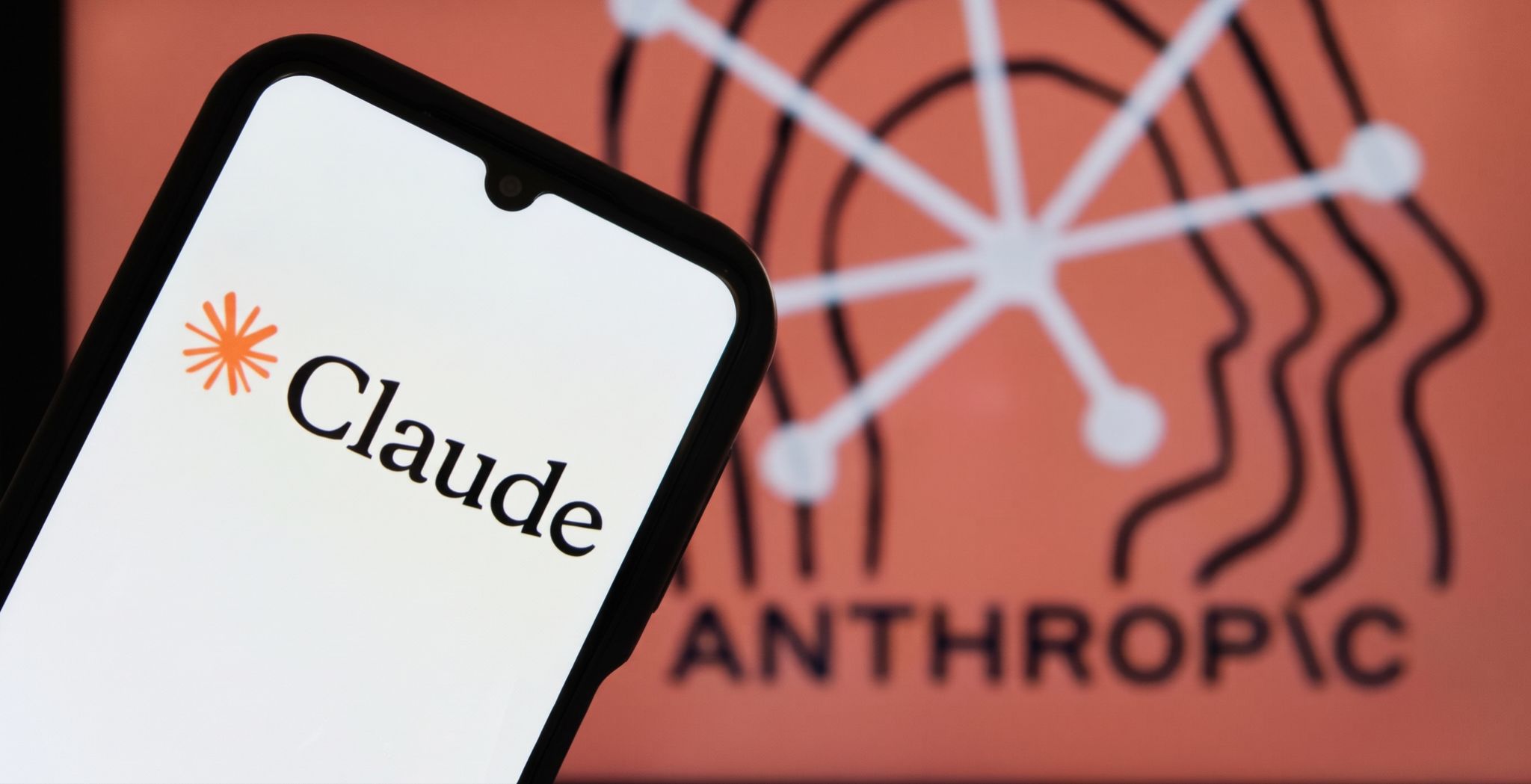
Anthropic, the company behind the Claude AI assistant, has started selling shares to the public in one of the largest stock market debuts in history. It wants investors to value the business at up to $1.4 trillion.
That number comes with a catch, and so do several others making the rounds this week. You have probably seen the scary $80.7 billion loss. You have probably seen the valuation quoted as both $1 trillion and $1.4 trillion in the same news cycle. Most coverage repeats these figures without explaining them, which leaves readers more confused than informed.
This article clears that up. Here is what Anthropic is actually doing, what the numbers really mean, where the genuine risks sit, and whether a normal investor can even buy in.
The Deal at a Glance
Anthropic filed its official IPO paperwork (a Form S-1) with the SEC on October 26, 2026, then launched its investor roadshow on November 10. Here are the confirmed terms.
| Detail | Figure |
| Company | Anthropic, PBC (maker of Claude) |
| Ticker and exchange | ANT on the Nasdaq |
| Shares offered | 825 million |
| Price range | $70 to $78 per share |
| Money raised in the IPO | Up to $64.4 billion |
| Implied valuation | ~$1 trillion (shares outstanding) to ~$1.4 trillion (fully diluted) |
| Separate private placement | $26 billion from Google, Nvidia and others, contingent on the IPO |
| Combined potential proceeds | Around $90 billion |
| Previous valuation | $965 billion (May 2026) |
| Lead banks | Goldman Sachs and Morgan Stanley (22 banks in total) |
| Expected trading debut | Week of November 16, 2026 (reports point to November 19 or 20) |
| CEO | Dario Amodei, who co-founded Anthropic in 2021 with other former OpenAI researchers |
The $80.7 Billion "Loss" That isn't What it Looks Like
The most alarming headline from Anthropic's filing is an $80.7 billion net loss for the first half of 2026. Taken at face value, it suggests a company burning cash at a frightening pace. It isn't, and understanding why is the single most useful thing you can take from this story.
Most of that loss, about $72.4 billion, is a non-cash accounting charge tied to convertible notes. In plain terms: earlier investors were given IOUs that convert into Anthropic shares. When Anthropic's own value jumped, those IOUs became worth far more on paper, and accounting rules force the company to record that increase as an expense. No money actually left the building. The loss is, in effect, a side effect of the company becoming more valuable.
Strip that paper charge out and the real operating picture is very different:
- Revenue was about $16.3 billion in the first half of 2026, up roughly 14 times from $1.16 billion in the same period a year earlier.
- The actual operating loss was just $693 million, not $80 billion.
- The second quarter of 2026 turned an operating profit of about $974 million.
So the honest summary is not "Anthropic lost $80 billion." It is "Anthropic's revenue exploded, it ran close to break-even on operations, and a bookkeeping rule produced a huge paper number." The full breakdown is laid out well by DataNorth and Dealroom.
$1 Trillion or $1.4 Trillion? Why Both Are Right
You will see Anthropic's valuation quoted two different ways, and neither is wrong. The gap comes down to which shares you count.
- Count only the shares that exist today ("shares outstanding") and the top of the price range values Anthropic at about $1 trillion.
- Add in shares that do not exist yet but will, such as employee stock options and restricted stock ("fully diluted"), and the figure stretches to about $1.4 trillion.
Think of it like pricing a house that has approved plans for an extension. One number is the house as it stands; the other assumes the extension gets built. Both describe the same property.
There is a second twist worth knowing. The $1.4 trillion target is actually lower than the $1.5 trillion to $2 trillion figures floated just weeks earlier, a retreat driven by nervousness about heavy AI infrastructure spending and a wobbly tech-stock market. Yet the Financial Times reported that strong demand could still push bankers to price above the range, lifting the valuation back toward $1.5 trillion. In other words, the "discount" may be a deliberate move to let investors bid the price up.
The Real Risk is a Near-Trillion-Dollar Bill to Pay
If the $80 billion loss is a distraction, here is the number that isn't. Anthropic has signed purchase commitments of roughly $895 billion, mostly for the computing power it needs to build and run Claude. That is the real weight on this company.
The spending is already steep. Anthropic put around $9 billion into compute and infrastructure in just the first half of 2026, more than the $7.3 billion it spent in all of 2025. Building frontier AI is extraordinarily capital-hungry, and those bills do not pause.
The whole investment case rests on one bet: that revenue grows fast enough, and costs shrink enough as a share of that revenue, to turn today's thin margins into real profit. Anthropic's own projections reportedly point to $190 billion to $200 billion in revenue by 2028, and Goldman Sachs, a lead bank on the deal, reportedly models $685 billion by 2030. For scale, revenue was around $4.6 billion for all of 2025.
There is genuine evidence behind the optimism. Anthropic's net revenue retention is about 900%, meaning existing customers are spending roughly nine times more than they did a year ago. Demand is real and compounding. The open question is whether it compounds fast enough to cover that $895 billion commitment before the money runs short. Nobody knows yet, and that uncertainty is what you are really buying.
Why the Whole Market is Watching this One IPO
This is not just a big company going public. It is a test of how much appetite investors still have for the entire AI boom.
AI spending has become the engine holding up the US stock market. Goldman Sachs has noted that AI investment is driving roughly half of the earnings growth in the S&P 500, even as the market's "breadth" (how many stocks are actually rising) sits at its weakest since the dot-com era. A lot is riding on a handful of AI names.
That makes Anthropic's debut a kind of referendum. If ANT prices strongly and trades up, it validates the sky-high valuations across the sector and strengthens the case for OpenAI's own expected listing. If it stumbles, the doubt spreads quickly to everyone else leaning on the same story, as CMSWire frames it.
For context, SpaceX set the recent bar when it listed in June 2026 at roughly a $1.75 trillion valuation, raising about $75 billion. Anthropic is aiming to be the first major frontier AI lab to follow that path onto the public market.
Can a Regular Investor Actually Buy ANT?
Short answer: not at the IPO price, but yes once it starts trading.
Getting shares at the offer price ($70 to $78) usually means having an account with one of the lead banks, such as Goldman Sachs or Morgan Stanley, and being invited into the allocation. For most everyday investors, that door is closed.
The realistic route is to wait for the stock to list. Once ANT begins trading on the Nasdaq, expected the week of November 16, 2026, anyone with a brokerage account that handles US stocks can buy it at the going market price, like any other listed share.
If you go that way, three things are worth knowing first:
- IPO days are volatile. The opening price can swing hard, and buying into first-day hype often means paying a premium.
- The lockup is unusual. Filings indicate some insiders can sell shares on day one rather than waiting the typical several months, which can add selling pressure.
- A lot of success is already priced in. At a valuation near $1.4 trillion on roughly $33 billion of annualized revenue, much of the expected growth is baked into the price before you buy.
None of this is a recommendation to buy or avoid ANT. It is simply the groundwork to understand before making your own call, ideally with a licensed financial adviser.
The Bull Case and the Bear Case, Side-By-Side
Reasonable people disagree sharply about this deal. Here is the honest version of both arguments.
The bull case: The growth is unlike almost anything on record. Anthropic's annualized revenue run-rate climbed from roughly $9 billion at the end of 2025 to about $47 billion by May 2026. It has a real enterprise business, reportedly serving most of the Fortune 10, and that ~900% net revenue retention shows customers deepening their spending fast. Reaching an adjusted operating profit at this scale, which many rivals have not, suggests a genuinely different trajectory from a pure cash-burning startup.
The bear case: A valuation near $1.4 trillion prices the stock at roughly 30 times revenue, a level that assumes Anthropic keeps a durable lead the market has not confirmed. Competition from OpenAI, Google and others is fierce, gross margins are still being proven, and several analysts hear echoes of 1999. As one former Goldman Sachs and JPMorgan executive put it to Benzinga, the sternest test will be Anthropic's first earnings report as a public company, when private-market hype meets public-market scrutiny.
Both cases rest on the same facts. The difference is whether you believe the growth outruns the spending, or the spending outruns the growth.
Bottom Line: What to Watch Next
Anthropic's IPO is historic in size and genuinely strong underneath the scary headlines, but it asks investors to pay today for growth that still has to arrive. The $80 billion loss is mostly an accounting illusion. The $895 billion in commitments is not.
Four signals will tell you how the story is unfolding:
- The final price. Does Anthropic price within its $70 to $78 range, or above it, as a sign of strong demand?
- The first day of trading. A big pop or a flat open sets the tone for the whole AI-IPO wave.
- The $26 billion private placement. Whether the Google and Nvidia investment closes alongside the IPO.
- The first earnings report. The real test, when public markets judge the growth story for themselves.
For now, the smartest move for most readers is not to rush in, but to understand exactly what the numbers mean, which most of the coverage has not bothered to explain.